
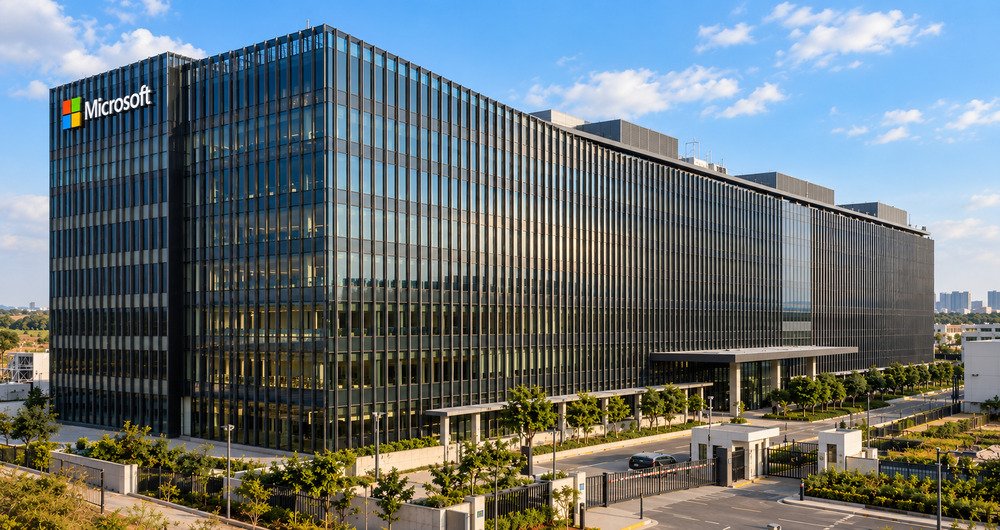
Microsoft has expanded its cloud and artificial intelligence (AI) infrastructure in India. Recently, the company launched its India South Central cloud region in Hyderabad. This is Microsoft’s fourth cloud region in India.
As a result, the new region strengthens Hyderabad’s growing role in cloud computing, data centres, AI and digital infrastructure. At the same time, it gives organisations more local cloud capacity to support their digital operations.
The Hyderabad cloud region became generally available on August 6, 2026. With this expansion, Microsoft aims to support the growing demand for cloud services and AI technologies across India.
Microsoft Launches India South Central Cloud Region in Hyderabad
The new Microsoft Hyderabad cloud region supports cloud applications, AI workloads and other digital services. In addition, it gives businesses greater access to Microsoft Cloud services.
Furthermore, the region can help organisations improve infrastructure resilience and service availability. Microsoft has included the expansion in its $20.5 billion investment commitment in India.
This investment also highlights the company’s continued focus on cloud and AI infrastructure in the country.
Sustainable Cooling for the New Cloud Region
The Hyderabad cloud region uses an effectively zero-water cooling approach. Instead of traditional water-based cooling systems, it relies on air-cooled chillers.
As data centre workloads increase, operators need more efficient cooling solutions. In particular, AI workloads require significant computing power and supporting infrastructure.
Therefore, efficient cooling has become an important part of modern data centre development. The use of air-cooled systems can reduce the need for water in data centre cooling. As a result, this approach supports the industry’s growing focus on sustainable digital infrastructure.
Hyderabad’s Growing Data Centre Ecosystem
Microsoft’s expansion comes as Hyderabad’s data centre ecosystem continues to grow. Meanwhile, demand for cloud computing, AI applications and enterprise technology continues to drive new infrastructure investments.
India’s data centre capacity could grow from around 2 GW to 6–7 GW by 2035. In addition, the country could attract more than $100 billion in data centre investments during this growth phase.
As the market expands, Hyderabad continues to attract technology companies and data centre operators. Consequently, these developments are increasing the city’s role in India’s digital infrastructure landscape.
India’s Cloud Market Continues to Expand
Businesses across India continue to move applications, workloads and data to cloud platforms. As a result, this shift is increasing demand for reliable cloud infrastructure.
India’s public cloud services spending could reach $45.7 billion by 2030. Moreover, the market could grow at an annual rate of 22.2%.
AI, analytics, enterprise applications and digital platforms are driving this growth. At the same time, organisations are increasingly using cloud technologies to scale operations and deploy new digital services.
Against this backdrop, Microsoft’s Hyderabad cloud region adds more capacity for organisations as cloud adoption continues to grow.
What the Microsoft Hyderabad Cloud Region Means for Businesses
The India South Central cloud region gives organisations another option for deploying cloud applications and workloads.
For example, businesses can use local cloud infrastructure for scalable computing, cloud applications and AI workloads. In addition, the new region can give organisations more flexibility when planning their digital infrastructure.
Furthermore, Microsoft’s expansion increases the availability of its cloud services in India. This, in turn, can support businesses as they adopt cloud computing and accelerate digital transformation.
Hyderabad Strengthens Its Cloud and AI Infrastructure
Microsoft’s India South Central region adds to Hyderabad’s growing cloud, AI and data centre infrastructure.
Currently, the city continues to see rising demand for cloud services and AI technologies. At the same time, new data centre investments are expanding its digital infrastructure.
Overall, Microsoft’s latest expansion adds further capacity to this ecosystem. It also supports the growing demand for next-generation cloud computing and AI services in India.




Join The Discussion